
If You Think You're Creative, This Might Make You Uncomfortable
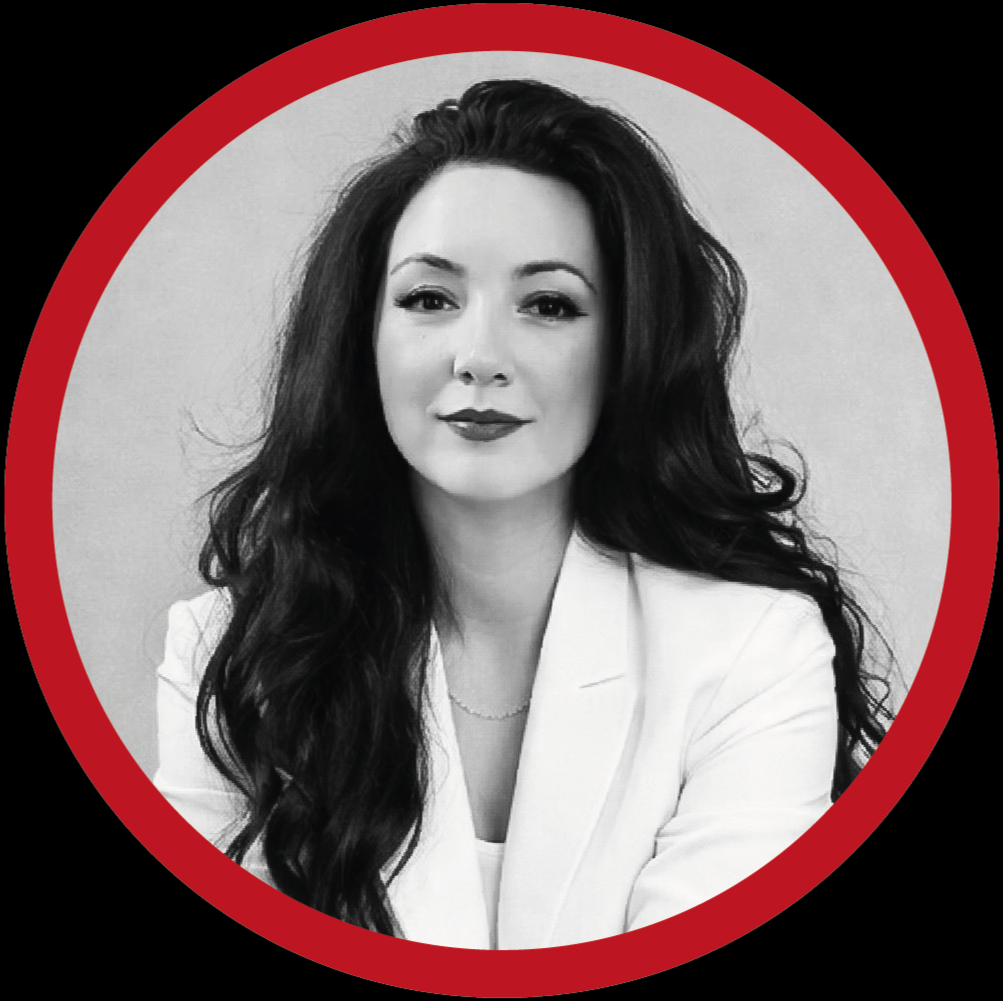
Today is my birthday. And birthdays have always taken me into the magical world of creation—into how we create, and even into deeper, existential questions. As a designer who has been running her own business for 18 years, I know this very clearly: creativity is not as romantic as it looks from the outside. It is not something you simply wait for. It is a process that often requires making decisions, selecting, eliminating, and reconstructing.
That’s why today, I wanted to write something that challenges the way most of us understand creativity.
Creativity Is Not What We Think It Is

We have misunderstood creativity for a long time. We tend to think of it like this: being creative means letting the mind wander, waiting for inspiration, staying in flow…But recent research suggests something quite different: Creativity is not just about being free. It is about knowing when to take control.
Two Fundamental States of the Mind
The brain actually operates in two different modes. We can think of them simply like this:
1. The Free Mind (Default Mode Network – DMN)
There is a scattered, wandering state of the mind. In this mode, the mind drifts. You daydream, your thoughts move elsewhere, and seemingly unrelated ideas begin to connect.
Most new ideas are born here. That’s why this is the “raw material” of creativity.

Indeed, in their widely cited paper “Creative cognition and brain network dynamics”, Beaty and colleagues (2016) show that creative thinking is closely linked to this associative network, where the mind is able to form distant connections.
2. The Editor Mind (Executive Control Network – ECN)
There is also a quieter, more rigorous side of the mind. The part that gathers, selects, and eliminates. The part that asks: “Does this actually work?” In this mode, the mind organizes itself. You focus, you decide, you evaluate: “Is this a good idea?”
This is where ideas take shape. That’s why this is the “processed” side of creativity.

In the influential 2025 study “Dynamic interaction between DMN and ECN predicts creativity,” it is shown that creative performance improves when this control network steps in to evaluate and refine ideas.
The Real Issue: The Ability to Switch
We used to think it was one or the other: either you are free, or you are controlled. But now we know that this is not true.

Creativity lies in the ability to move between the free mind and the editor mind— to allow enough chaos, and then step in to select what matters and eliminate the rest.
Too much freedom leads to distraction and lack of focus. Too much control leads to blockage and stagnation. Real creativity emerges in the balance between the two.
What Makes Creative People Different
Creative people are not simply those who generate more ideas. They are the ones who better understand when to let go, when to focus, when to continue, and when to stop. So perhaps the issue is not talent. It is mental flexibility.
We can think of it this way: The free mind writes the ideas. The editor mind deletes what is unnecessary. But most people confuse these two phases. Either they keep producing without ever selecting or they start judging before anything even takes form. Both weaken creativity.
Conclusion: Creativity Is a Matter of Balance
Creativity is not about being scattered. But it is not about being purely disciplined either. Creativity is about knowing when to let the mind be free, and when to bring it back under control.
Perhaps that’s why creativity looks like a moment of inspiration from the outside, but from within, it feels like a constant search for balance. Because creating is sometimes about trusting the flow, and sometimes about cutting it off. And maybe the best ideas emerge exactly at that thin line where these two meet.
Pelin Karakoç-the Designer
Kaynakça
Beaty, R. E., Benedek, M., Silvia, P. J., & Schacter, D. L. (2016). Creative cognition and brain network dynamics. Trends in Cognitive Sciences. https://www.researchgate.net/publication/282979693_Creative_Cognition_and_Brain_Network_Dynamics
Zhuang, K. et al. (2025). Dynamic interaction between default mode and executive control networks predicts creativity. Nature Communications. - https://www.nature.com/articles/s42003-025-07470-9


Yorumlar